Key points
- Keep cinnamon dry.
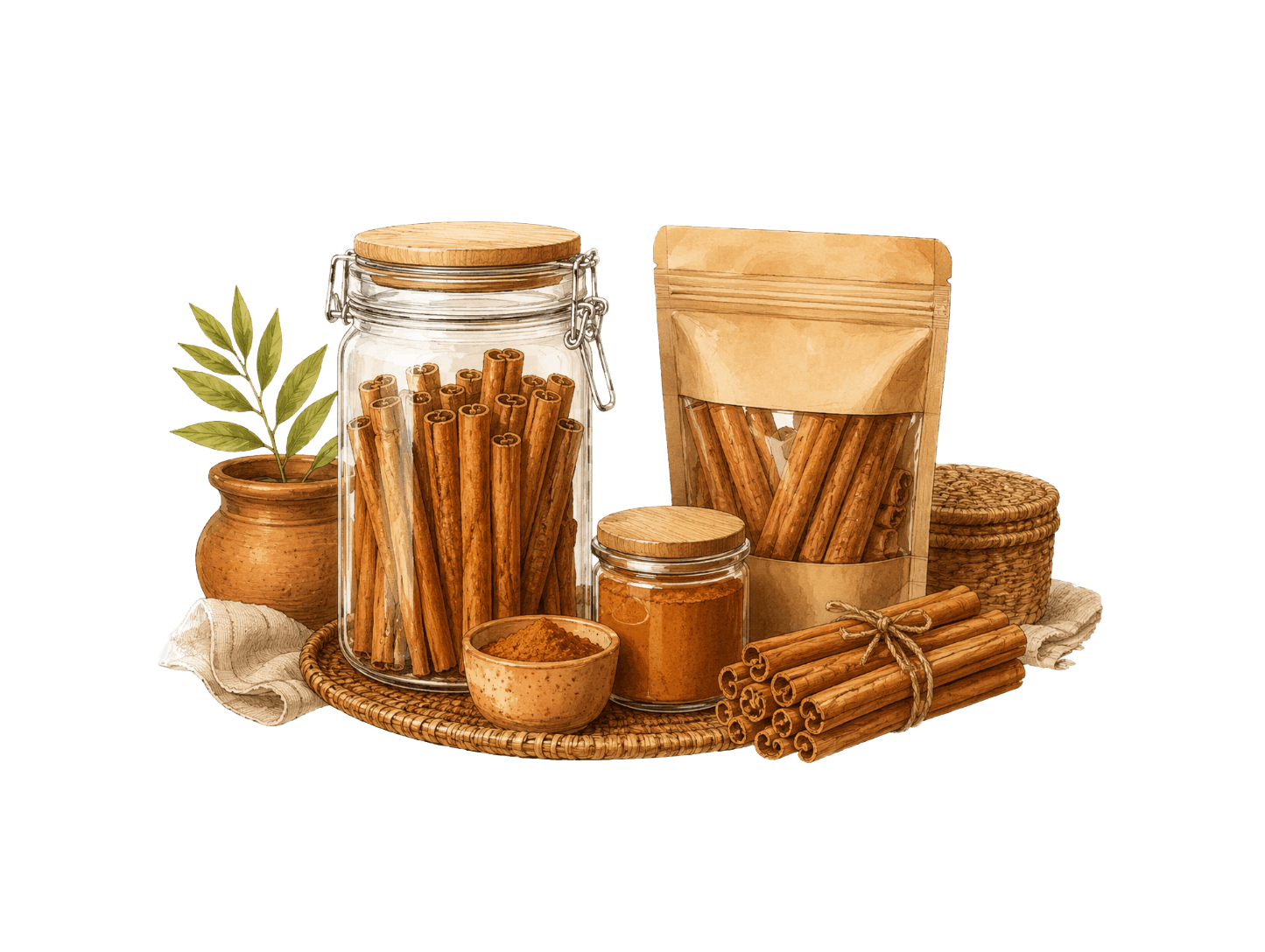
- Use a clean, food-safe, tightly closed container.
- Store away from direct sunlight and cooking steam.
- Keep away from strong-smelling materials.
- Grind only the quantity needed when practical.
- Discard cinnamon showing mould, dampness, pests or an abnormal odour.
Use a clean, airtight container
- Use food-safe glass, metal or suitable barrier packaging.
- Close the package promptly after use.
- Avoid repeatedly leaving a large bulk package open.
- Do not return used or damp utensils to the container.
- For wholesale stock, use inner food-grade liners and shipping packaging appropriate to the destination and product form.
Protect cinnamon from moisture
Cinnamon must remain dry. Humid storage and condensation can damage quality and encourage mould. Do not store it beside a kettle, cooker, sink or open window exposed to rain.
- Use a dry spoon or tool.
- Do not mix newly received dry cinnamon with older material of uncertain condition.
Keep it away from heat and sunlight
- Use a cool cupboard or controlled dry store.
- Do not place transparent containers in direct sunlight.
- Avoid locations above ovens, refrigerators or other heat-producing equipment.
- Stable storage conditions are better than repeated temperature changes.
Whole quills versus ground cinnamon
Whole quills expose less surface area and generally preserve aroma longer. Ground cinnamon has much more exposed surface area and loses aroma more quickly.
Keep cinnamon whole until needed where possible, grind small batches and close powder packaging immediately. Do not publish one universal shelf-life promise because crop, moisture, treatment, grinding, packaging and storage conditions differ.
Should cinnamon be refrigerated?
Routine refrigeration is usually unnecessary for properly dried cinnamon. Moving containers between cold storage and a warm humid room can create condensation if the package is opened before reaching room temperature.
If a commercial operator uses temperature-controlled storage, packaging and moisture management must prevent condensation.
Signs cinnamon should not be used
Aroma naturally fades over time; weak aroma is mainly a quality problem, while mould, infestation and contamination are safety concerns.
- Visible mould.
- Damp or soft patches.
- Musty, sour or otherwise abnormal odour.
- Insect activity.
- Foreign contamination.
- Damaged packaging that has allowed water or dirt to enter.
Packing date, processing date and best-before date
Do not automatically call the processing period the harvest date. Do not generate a best-before date without the company's documented shelf-life basis.
| Term | Meaning |
|---|---|
| Processing period | When the cinnamon bark was peeled and prepared. |
| Packing date | When the product was placed into its current sales or shipment package. |
| Best-before date | A quality-based date assigned by the responsible food business based on product, processing, packaging and storage evidence. |
Commercial storage checklist
- Lot identification.
- Product form and grade reference.
- Receipt date.
- Processing or packing information where available.
- Packaging integrity.
- Dry, clean storage location.
- Stock rotation.
- Pest-control records.
- Separation from chemicals and strong odours.
- Retention samples where required.
- Periodic condition inspection.
Sources and further reading
Related guides
How to Use Ceylon Cinnamon Quills
Use whole or broken quills in tea, coffee, rice, curries, stews, syrups and desserts.
7 min read
How Ceylon Cinnamon Is Made
Follow the process from harvested stem through scraping, peeling, rolling, drying and grading.
9 min read
The Four Main Commercial Types of Cinnamon
Compare Ceylon, Chinese cassia, Indonesian Korintje and Vietnamese Saigon cinnamon.
8 min read