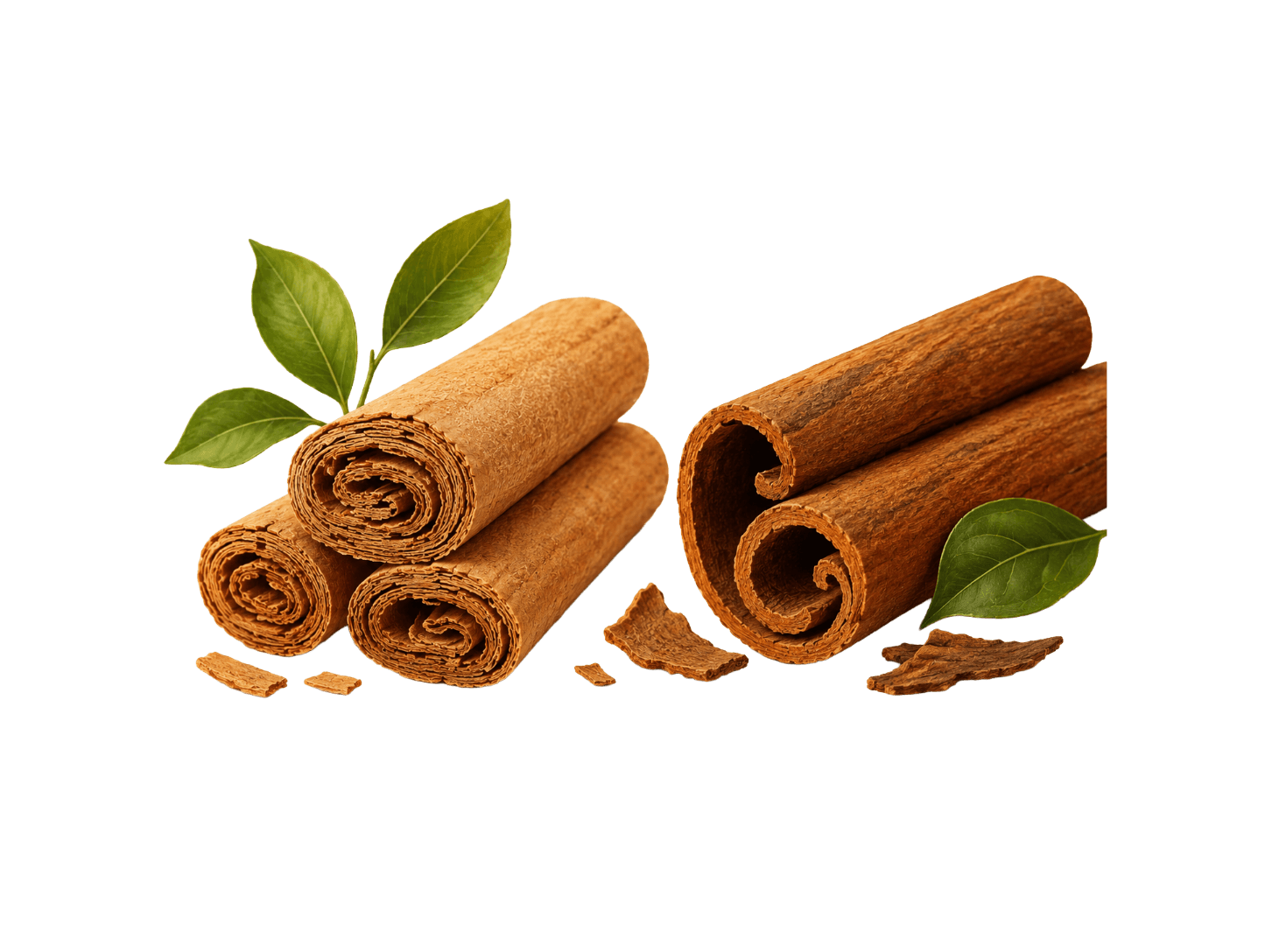
Key points
- Ceylon cinnamon: Cinnamomum verum.
- Native range of Cinnamomum verum: Sri Lanka.
- Ceylon quill: multiple thin layers.
- Cassia stick: usually one or a few thick, hard layers.
- Ceylon cinnamon generally contains considerably less coumarin than common cassia varieties.
- A precise coumarin value must not be stated without testing the relevant product lot.
The quickest visual difference
Ceylon cinnamon generally has thin, paper-like bark layers rolled together. Its cross-section resembles a tightly packed cigar with many delicate layers.
Cassia commonly forms one thick inward curl or a small number of hard layers. Ceylon quills are usually easier to break or crumble than thick cassia sticks.
Colour is useful but not decisive because crops, processing, age, lighting and storage affect appearance. Use typically, commonly and generally because natural products vary.
| Feature | Ceylon cinnamon | Common cassia |
|---|---|---|
| Botanical reference | Cinnamomum verum | Common commercial cassias include C. aromaticum, C. burmanni and C. loureiroi |
| Typical bark form | Many thin layers | Thicker, harder curl |
| Typical colour | Tan to light brown | Brown to reddish brown |
| Texture | Thin and comparatively fragile | Thick and hard |
| Typical flavour description | Delicate, sweet, citrus-like and lightly floral | Stronger, hotter and more assertive |
| Common commercial forms | Layered quills, cut quills, quillings and powder | Thick sticks, broken bark and powder |
Botanical names matter
Ceylon cinnamon is Cinnamomum verum. Cinnamomum zeylanicum is an older synonym still seen in trade and literature.
Cassia is a commercial umbrella term rather than one single product. Chinese cassia is commonly referred to as Cinnamomum aromaticum; Cinnamomum cassia also appears widely in trade and literature.
Indonesian or Korintje cinnamon is Cinnamomum burmanni. Vietnamese or Saigon cinnamon is Cinnamomum loureiroi. Powder cannot reliably be identified by shape, so suitable testing may be required for commercial verification.
How flavour differs
Ceylon cinnamon is generally described as milder, sweeter and more delicate. Cassia varieties are usually stronger and more forceful.
Indonesian Korintje is commonly associated with the familiar warm cinnamon profile used in North American baking, while Saigon cinnamon is known for an especially intense aroma and flavour. Suitability depends on the food, market and buyer preference.
Coumarin: the careful explanation
Coumarin is a naturally occurring flavouring substance found in several plants. It is generally present at higher concentrations in cassia cinnamon than in Ceylon cinnamon.
Regulatory and scientific authorities advise moderation with high, repeated cassia intake, particularly for people consuming large quantities regularly. Ceylon cinnamon is commonly selected when lower coumarin exposure is a priority.
Coumarin content still varies naturally. CeyQuills must not state a fixed percentage or make a lot-specific safety claim unless the relevant lot has been tested.
Which should a buyer choose?
| Choose Ceylon cinnamon when the buyer wants | Choose a cassia type when the buyer wants |
|---|---|
| Sri Lankan origin | A stronger cinnamon impact |
| A layered, delicate quill | A harder, thicker stick |
| A lighter flavour profile | A familiar baking or beverage profile |
| Whole-quill presentation | A particular regional specification |
| Lower coumarin as a general species characteristic | A market that specifically requests cassia |
How to verify a product
- Ask for the botanical species.
- Ask for the country of origin.
- Inspect the cross-section of whole sticks.
- Ask whether the product is whole, cut, quillings or powder.
- Request actual-lot images.
- For powder or high-assurance procurement, request appropriate species-authentication testing.
Sources and further reading
Cinnamomum verum
Supports botanical naming and Sri Lankan native-range context for Ceylon cinnamon.
Kew Plants of the World OnlineCinnamomum aromaticum
Supports botanical naming and range context for Chinese cassia.
Kew Plants of the World OnlineCinnamomum burmanni
Supports botanical naming and range context for Indonesian or Korintje cinnamon.
Kew Plants of the World OnlineCinnamomum loureiroi
Supports botanical naming and Vietnam-origin context for Saigon cinnamon.
German Federal Institute for Risk AssessmentFAQ on Coumarin in Cinnamon and Other Foods
Supports cautious explanation of coumarin and repeated high cassia intake.
NCCIHCinnamon: Usefulness and Safety
Supports the distinction between culinary information and medical advice.
Related guides
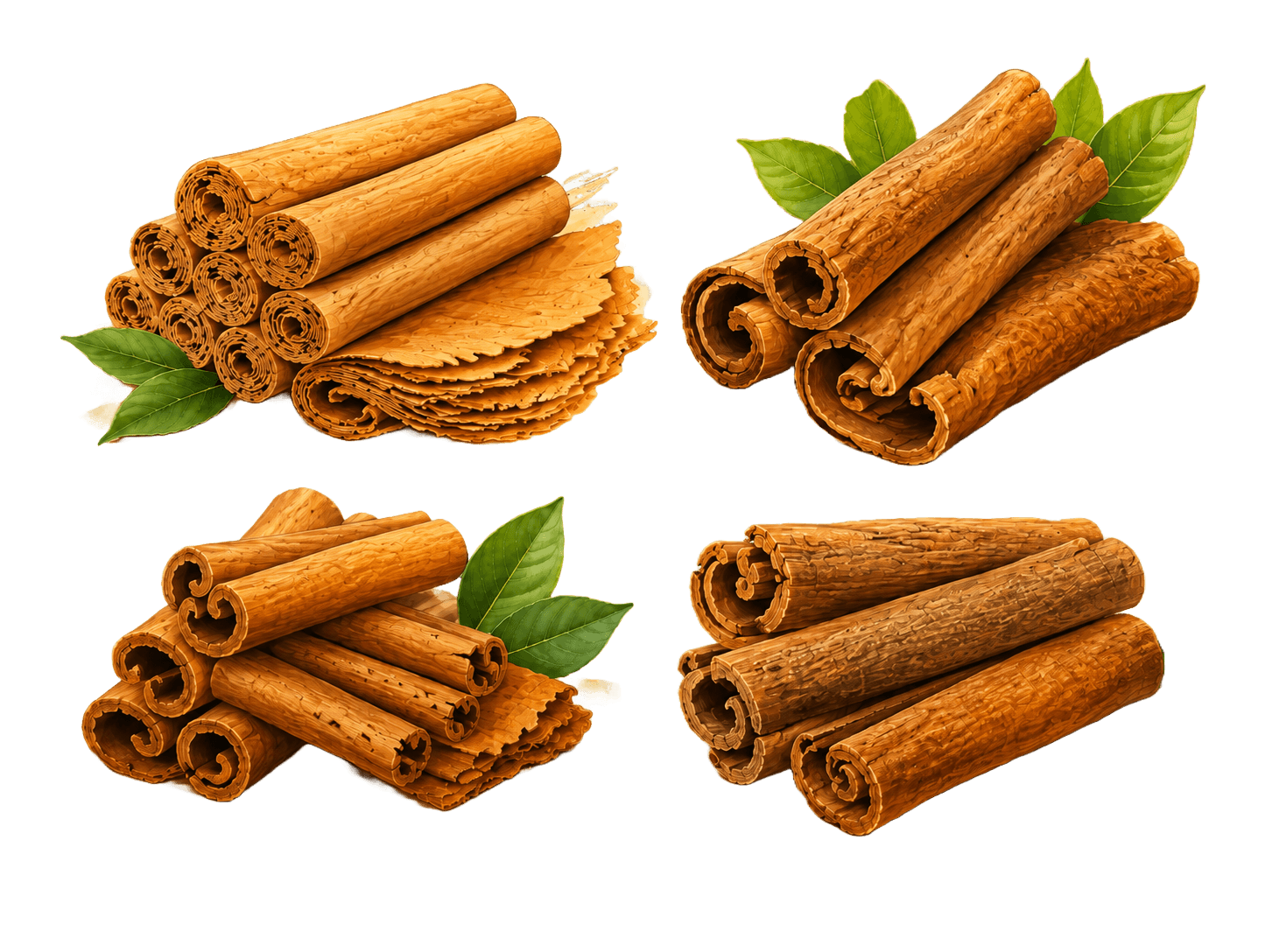
The Four Main Commercial Types of Cinnamon
Compare Ceylon, Chinese cassia, Indonesian Korintje and Vietnamese Saigon cinnamon.
8 min read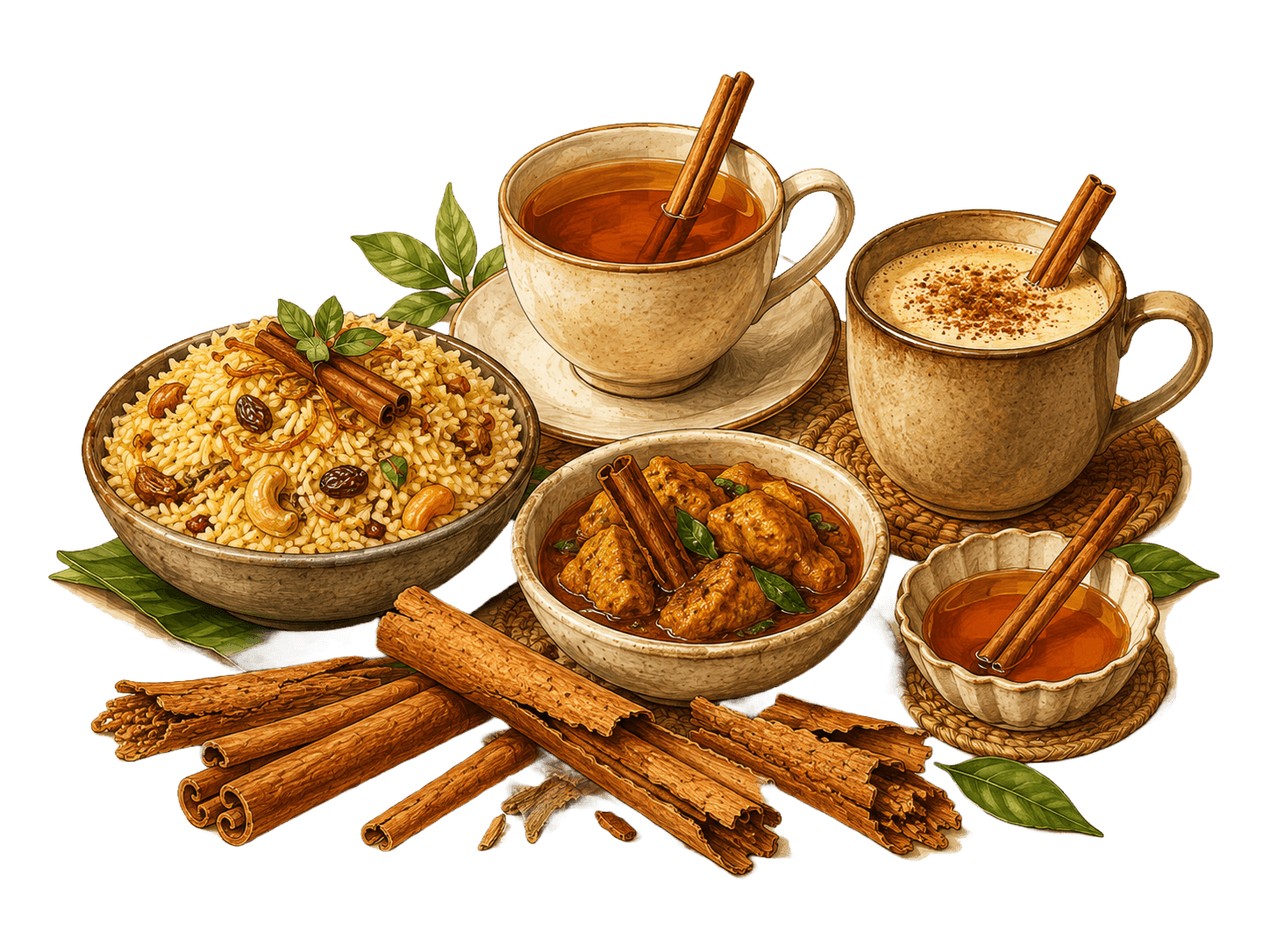
How to Use Ceylon Cinnamon Quills
Use whole or broken quills in tea, coffee, rice, curries, stews, syrups and desserts.
7 min read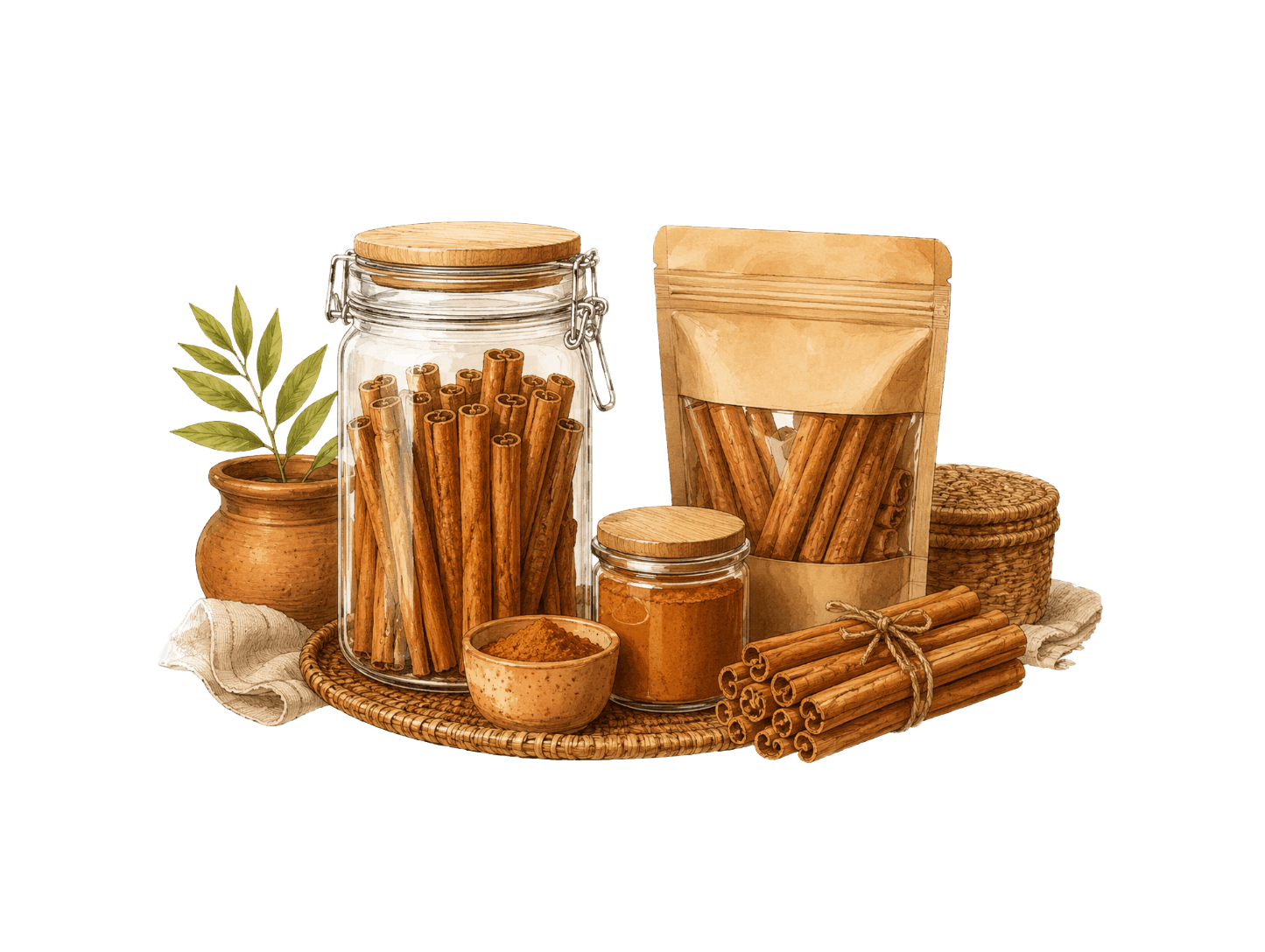
How to Store Cinnamon
Protect whole quills and powder from moisture, heat, sunlight, contamination and aroma loss.
7 min read